
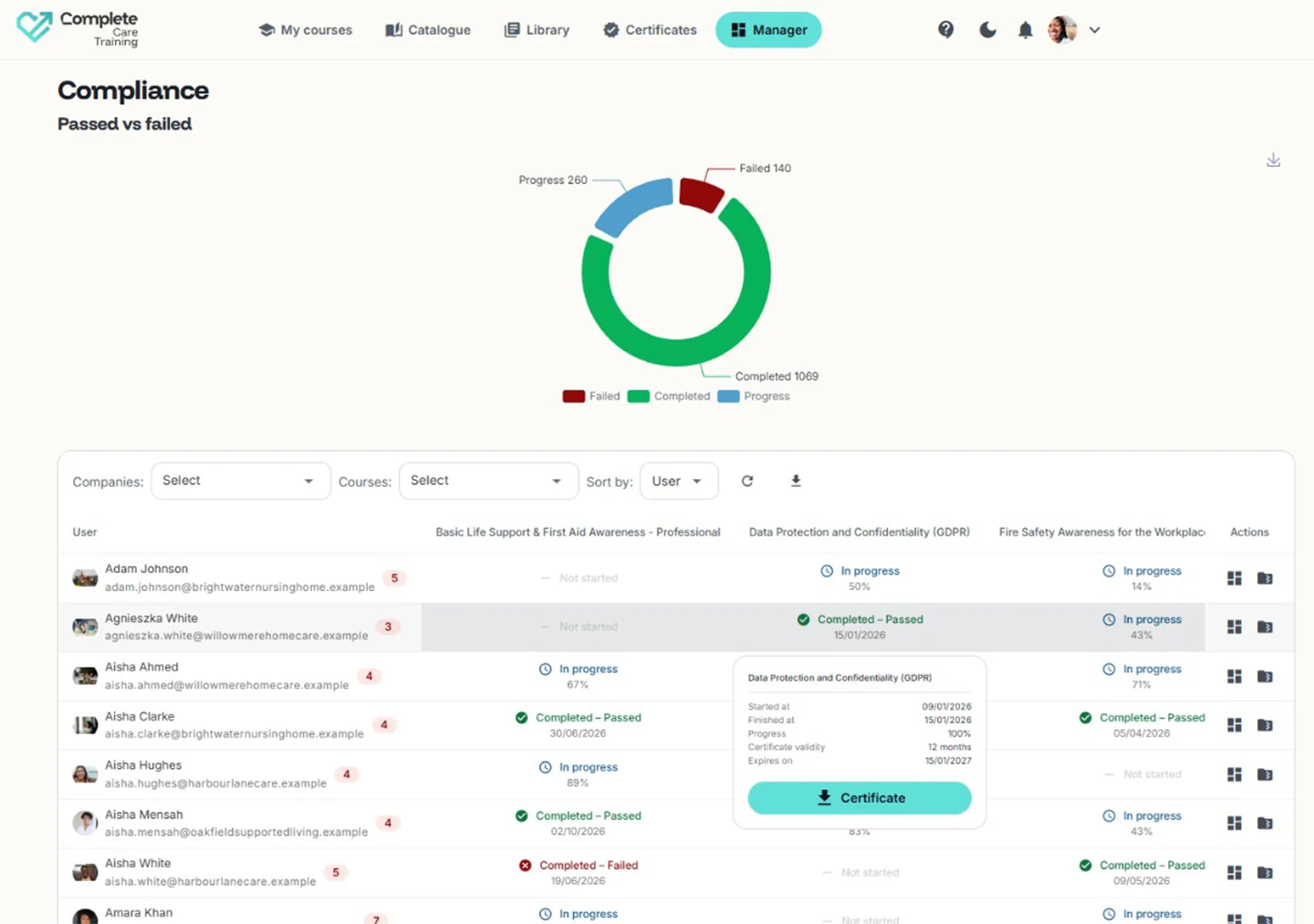
Certificates alone won't satisfy CQC. Build a training matrix, record competency checks and link learning to supervision. Your inspection checklist.
You need three layers of evidence: records showing training is complete and in date, proof that staff are competent in practice, and a training policy explaining why you train the way you do. Certificates cover only the first layer.
What is a training matrix?
A training matrix is one table listing every staff member against every required topic, with completion dates and refresher due dates. It lets you and the inspector see gaps at a glance. Colour-coding overdue, due-soon and in-date entries makes it easy to act on.
What should my training evidence pack include?
- A training and development policy listing required topics by role and your refresher periods
- An up-to-date training matrix for all staff, including bank and agency workers
- Certificates or completion records for each course
- Observed competency records for medication, moving people and other key tasks
- Induction records, including Care Certificate standards sign-off for new starters
- Oliver McGowan role mapping showing which roles need Tier 1 or Tier 2
- Supervision and appraisal notes that discuss learning and practice
- A plan, with dates, showing how you will close any current gaps
What if some staff are overdue?
Don't hide it. Inspectors worry more about gaps you have not spotted than about gaps you are already fixing. Show the overdue entries, the booked dates and any interim risk controls, such as not rostering an overdue worker on medication rounds.
Should I record training on ASC-WDS?
Skills for Care's Adult Social Care Workforce Data Set (ASC-WDS) lets you record training and qualifications for each worker. It helps national workforce planning and is a requirement for some funding, including LDSS claims. Many providers use it alongside their own matrix.
How do I show training improves care?
Link learning to outcomes. For example, show that falls dropped after moving and handling refreshers, or that medication errors fell after you introduced competency checks. This is the kind of evidence that supports a Good or Outstanding judgement under the well-led key question.


